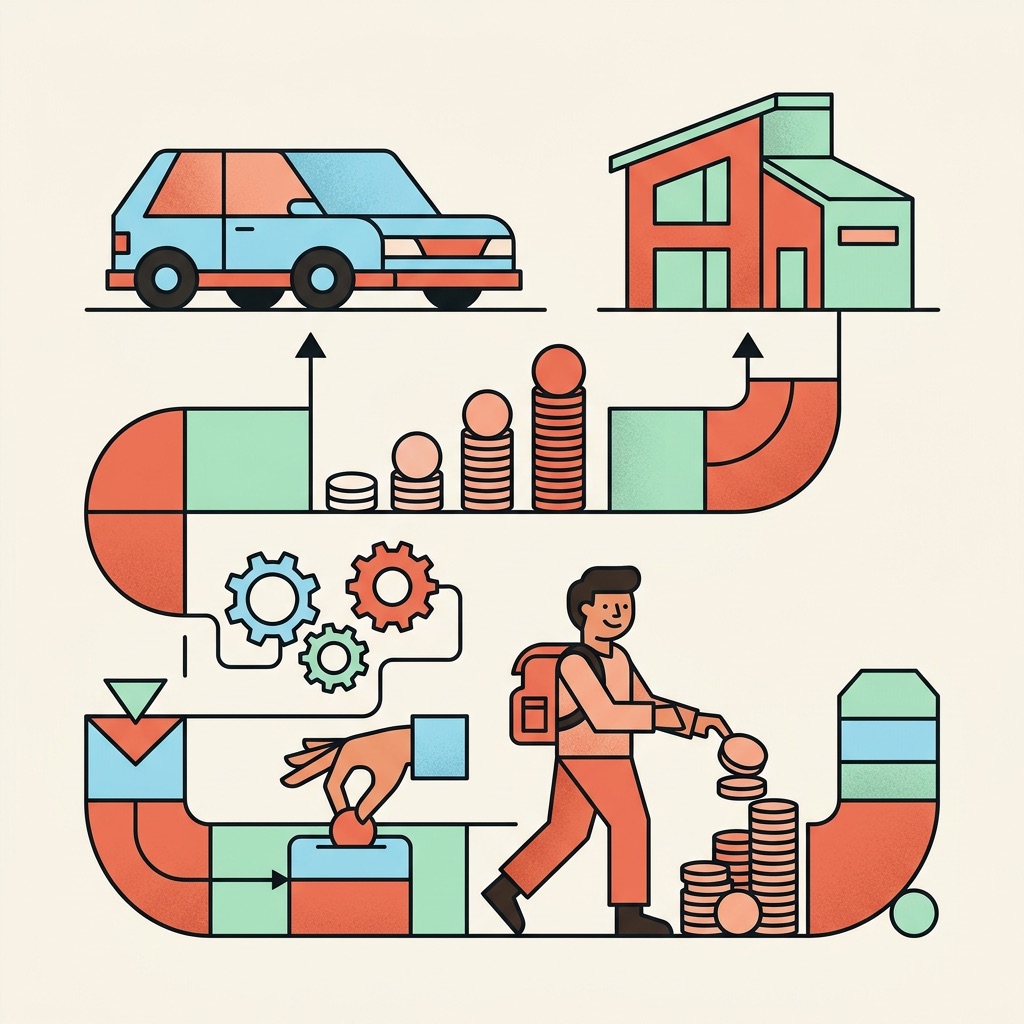
How to Save for a Car Down Payment and Other Major Purchases: A Comprehensive Budgeting Guide
Estimated reading time: 10 minutes
Key Takeaways
- Strategic budgeting is crucial for achieving significant financial goals.
- Prioritizing savings goals like a car down payment can reduce financial strain.
- Setting realistic savings goals and timelines ensures consistent progress.
- Automating savings and reducing discretionary spending are effective strategies.
- Balancing multiple savings goals requires careful planning and regular adjustments.
Table of Contents
- Introduction
- Saving for a Car Down Payment
- Budget to Buy a New Phone
- Saving for Home Renovation
- Budget for New Furniture
- Budgeting for Lifestyle Improvements
- Integrating Multiple Savings Goals
- Practical Tips and Tools for Effective Budgeting
- Conclusion
- FAQ
Introduction
Strategic budgeting is essential when preparing for significant financial goals like saving for a car down payment. This process controls spending, sets clear priorities, and maintains financial stability. By strategically budgeting, you can not only save for a car down payment but also budget to buy a new phone, plan for home renovation, allocate funds for new furniture, and even make lifestyle improvements.
Saving for a car down payment is often one of the first major savings goals individuals set. With thoughtful planning, you can manage multiple financial objectives simultaneously. Let’s explore how to set a budget for these various goals to ensure long-term financial success while fulfilling immediate desires. Learn more about creating a budget here and personal financial planning tips here.
Saving for a Car Down Payment
Importance of Prioritizing This Goal
A car down payment is a substantial expense but investing in this upfront cost reduces the overall amount financed, which can significantly lower monthly auto loan payments. Prioritizing this goal helps in achieving faster car ownership and lessens financial strain over the duration of the loan.
Set Realistic Savings Goals & Timelines
Start by researching the average car down payment amounts for the type of vehicle you’re interested in. With this information, calculate a monthly savings target that fits your timeline. Find tools to help with budgeting here.
Budget Prioritization
Treat saving for a car down payment like a mandatory monthly expense. By allocating a fixed portion of your income to this goal, you build discipline and ensure consistent progress.
Strategies for Accumulating Funds
- Automate Savings Transfers: Set up automatic transfers from your checking account to a dedicated car savings fund.
- Reduce Variable Spending: Cut back on discretionary expenses like dining out or entertainment to boost savings (https://getpennies.com/blog/how-to-budget-for-groceries).
- Track Progress: Use budgeting apps or spreadsheets to monitor your savings trajectory https://getpennies.com/blog/daily-expense-tracker-app-guide.
Budget to Buy a New Phone
Allocate Funds in Your Budget
Include a separate line item in your budget for a new phone. This ensures you can save for a phone without disrupting other major financial goals like a car down payment.
Tips for Affordable Options
Consider purchasing last year’s models, refurbished units, or taking advantage of promotions to reduce costs. It’s important to balance technological desires with overall financial objectives. Further advice on budgeting and spending can be found here.
Avoid Over-Allocation
Ensure that each tech purchase is weighed against your bigger financial picture, such as saving for a car or home improvements.
Saving for Home Renovation
Planning & Estimation
Begin by identifying necessary renovations, whether structural, cosmetic, or functional. Obtain multiple quotes or use online tools to estimate the cost, ensuring your budget is realistic.
Budgeting Approach
Contribute a specific amount each month towards your “saving for home renovation” fund. Distinguish between essential renovations and desired improvements. Read more on handling renovations effectively.
Prioritize Projects
Start with the most urgent needs, then progress to aesthetic or luxury features, ensuring the most impactful improvements are prioritized.
Budget for New Furniture
Establish a Dedicated Furniture Budget
Create a dedicated category in your budget for “budget for new furniture.” This prevents impulse purchases and encourages research into quality and durability.
Smart Shopping Practices
- Price Comparisons: Look at various retailers including online, big-box stores, and local shops to find the best deal.
- Timing Purchases: Plan your buys around sales or clearance events for better savings.
Integration into Overall Financial Plan
Ensure that your furniture spending doesn’t overshadow more critical savings goals, allowing room for flexibility and balance. Learn more about financial planning here.
Budgeting for Lifestyle Improvements
Identifying Lifestyle Goals
Lifestyle improvements might include fitness classes, travel, hobbies, or personal development. Choose activities that genuinely enhance your well-being.
Allocate Funds Wisely
Decide on a set percentage or specific dollar amount from each paycheck dedicated to lifestyle enhancements, maintaining equilibrium between short-term enjoyment and fulfilling long-term aspirations. Explore more on balanced budgeting here.
Alignment with Broader Objectives
Make sure that your lifestyle budget aligns with major savings objectives, ensuring all financial activities are harmonious and sustainable.
Integrating Multiple Savings Goals
Balancing Techniques
Adopt frameworks like the 50/30/20 rule (https://getpennies.com/blog/master-finances-50-30-20-rule-calculator), which divides income into needs, wants, and savings. Ensure each significant goal, like saving for a car down payment or home renovation, has its own line item in the budget. Discover more about effective budgeting techniques here.
Tools & Apps
Leverage popular budgeting apps or spreadsheet templates to simultaneously track and manage multiple savings goals. Find out more about these tools here.
Pitfalls & Adjustments
Avoid the trap of overcommitting your finances. Consistently review your budget and adjust priorities in tandem with income changes or evolving needs.
Practical Tips and Tools for Effective Budgeting
Recommended Methods
- Zero-Based Budgeting: Allocate every dollar to a specific purpose to maximize control.
- Envelope System (https://getpennies.com/blog/envelope-budgeting-app-guide): Use physical or digital envelopes for each expense category.
- 50/30/20 Rule: Allocate income towards essential expenses, discretionary spending, and savings. Details on budgeting systems can be found here.
Use of Technology
Budgeting apps can sync bank accounts, set alerts, and visualize goals, facilitating real-time tracking and financial management https://getpennies.com/blog/simplest-budgeting-app-guide.
Review & Adjust Regularly
Regularly revise your budget to accommodate life changes or new financial objectives, maintaining effective control over your finances. Read more about adjusting financial plans here and https://getpennies.com/blog/how-to-track-discretionary-spending.
Conclusion
In summary, effective budgeting for multiple goals involves setting clear, prioritized objectives, consistent tracking, and an adaptable approach as circumstances evolve. By developing a comprehensive financial strategy, you can efficiently save for key milestones like a car down payment and achieve broader lifestyle improvements.
Remember that discipline and flexibility are paramount in maintaining financial stability and fulfilling your aspirations for both major purchases and lifestyle enhancements. For additional insights on budgeting techniques and maintaining financial discipline, refer to these resources: Bank of America Budgeting Guide, Financial Planning Tips, and Budgeting Advice.
By tailoring and personalizing your budgeting methods, you can successfully achieve your diverse financial goals while sustaining a stable economic future.
FAQ
How much should I save for a car down payment?
A common guide is twenty percent on a new car and ten percent on a used one, which keeps you from owing more than the car is worth. The more useful question is what monthly payment you can carry comfortably, then work backwards from there.
What budgeting method is best for multiple savings goals?
Give each goal its own budget rather than one pot. A single balance hides the fact that the car money and the holiday money are the same money, and separate budgets make the trade-off obvious when you move funds between them.
How can I automate my savings?
Move the money on payday, before you plan anything else, with a standing order into a separate account. Automation works because it removes the monthly decision, not because it finds you extra money.
Are there any tools to help track multiple savings goals?
Any budgeting app that runs several budgets at once will do it. Look for the ability to transfer between budgets, because goals change and you will want to move money across without losing the history behind it.